12 May, 2026.
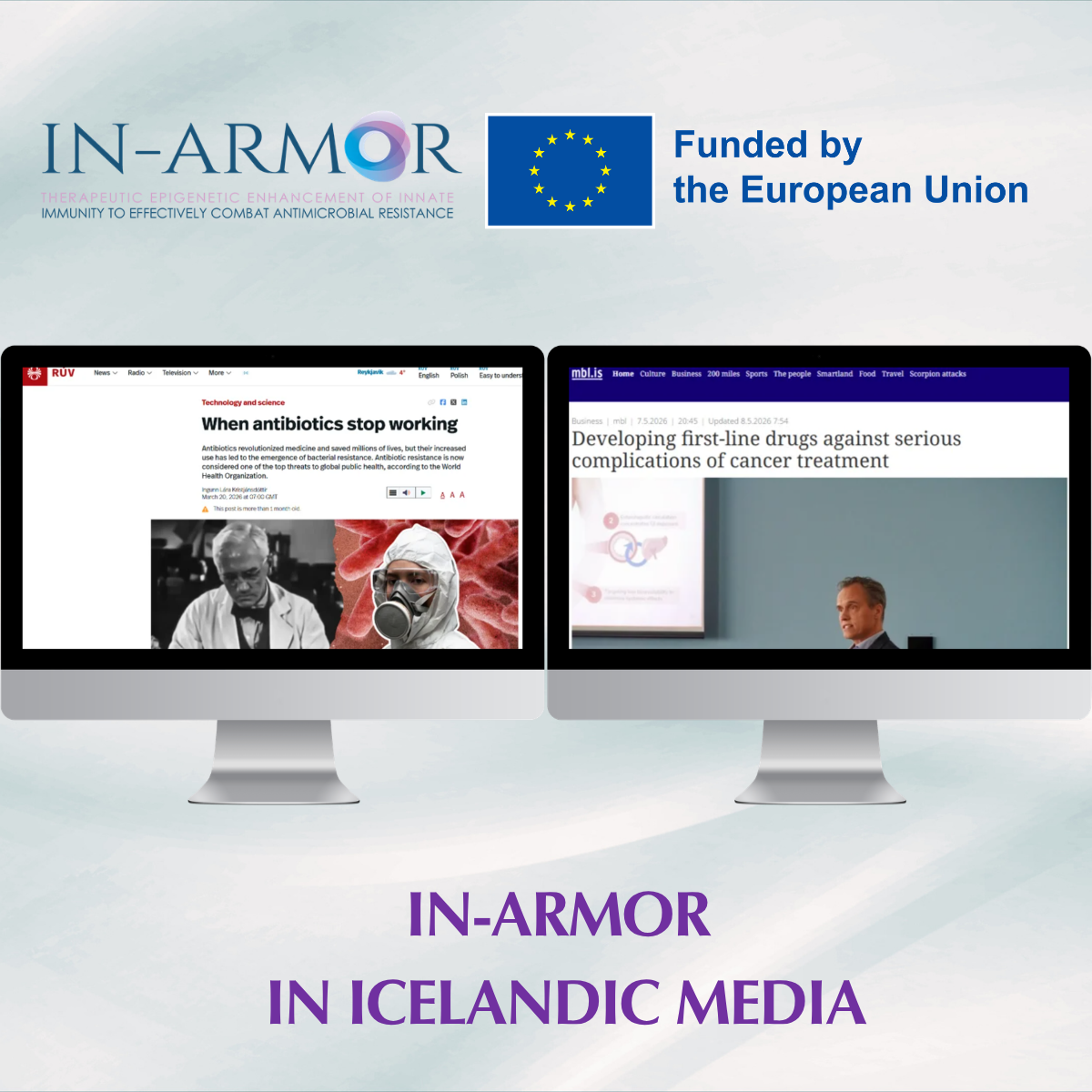
The IN-ARMOR project has recently received significant media coverage in Iceland, highlighting its key role in the global fight against antibiotic resistance. The initiative has been the subject of reports in major national media outlets, including the daily newspaper Morgunblaðið (mbl.is) and the national broadcaster RÚV.
A major public health challenge
Media attention has focused on how IN-ARMOR tackles Antimicrobial Resistance (AMR), designated by the WHO as one of the top ten threats to public health of our time. The articles highlight that, given the growing loss of effectiveness of traditional antibiotics, it is vital to develop disruptive approaches that prepare healthcare systems for future bacterial threats.
Host-Directed Therapy
The focus of the news is the innovative Host-Directed Therapy (HDT) being developed by the consortium. Unlike conventional antibiotics, which directly attack pathogens, IN-ARMOR’s technology seeks to strengthen the body’s own innate immune defences. By inducing host defence peptides (AMPs) and reinforcing epithelial barriers, the treatment helps the body to stop the infection on its own, preventing microbes from developing new resistance mechanisms.
Impact and European support
The press coverage also highlights the financial backing from the European Union’s Horizon Europe programme, which has allocated approximately €6 million to this research. With the collaboration of 16 organisations from 10 countries, the project aims not only to save lives but also to reduce the enormous economic burden that AMR places on healthcare systems, estimated at billions of euros.
This increased public visibility is a cornerstone of the project’s communication strategy, which aims to raise awareness among citizens and policymakers of the need for sustainable solutions to tackle ‘superbugs’.
You can read both full articles visiting the following links: